
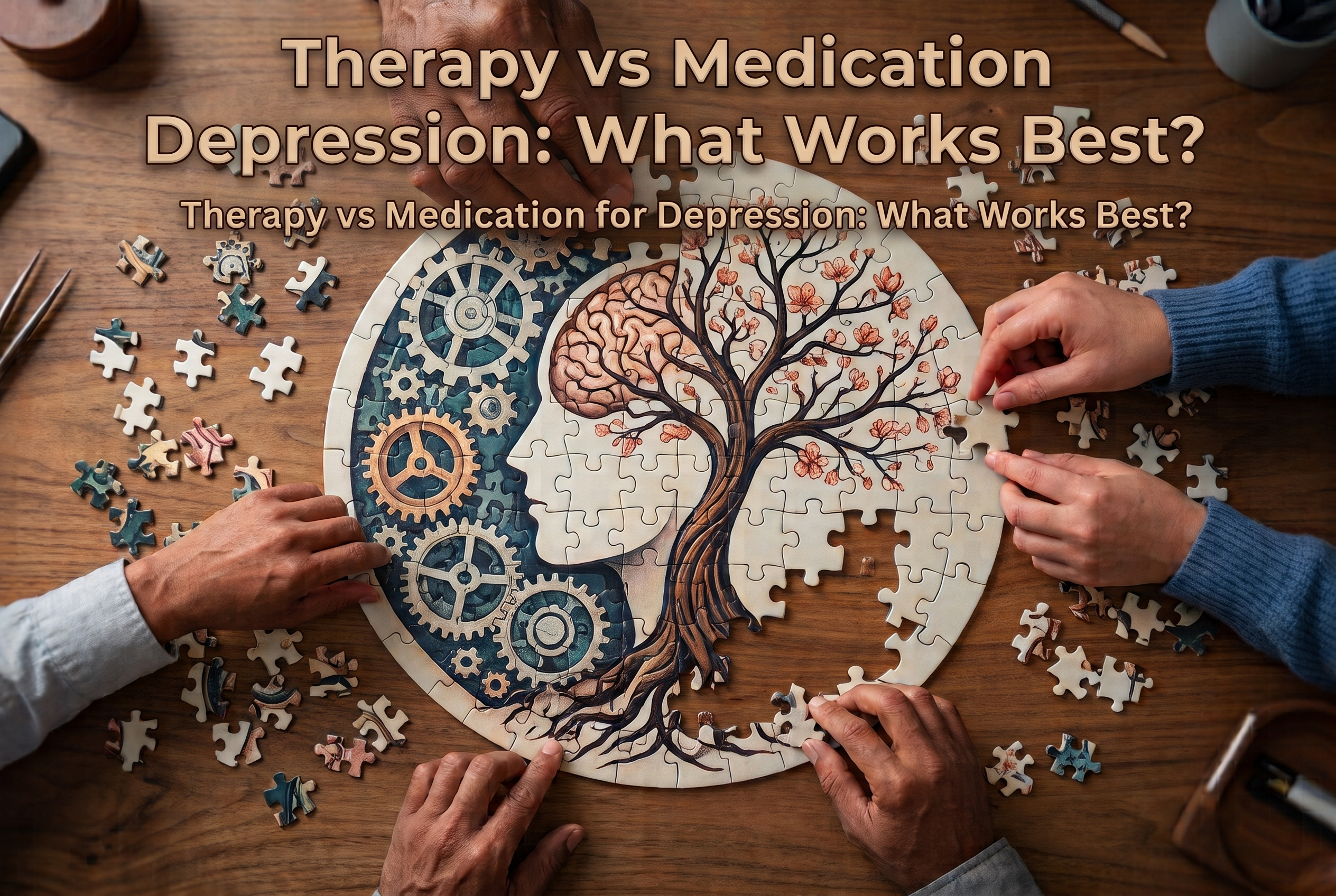
Therapy vs Medication for Depression: What Works Best?
When deciding between Psychotherapy (therapy) and Pharmacotherapy (medication) for depression,, therapy focuses on changing thought patterns and behaviors, while medication targets brain chemistry. For many individuals, a combined approach delivers the most effective and long-lasting results.
Why This Decision Matters More Than You Think?
Feeling stuck between choosing therapy or medication?
You’re not alone. More importantly, you don’t have to figure this out by yourself.
Choosing between treatment options for depression isn’t just a medical decision. It’s also a strategic choice.
Here’s the reality:
Wrong approach → slow progress, frustration
Right approach → faster recovery, stability, clarity
Understanding therapy versus medication for depression isn’t about picking sides. It’s about finding what works best for you.
Understanding Therapy vs Medication for Depression
Both treatment paths are clinically validated and widely used. According to the National Institute of Mental Health, effectiveness depends on symptom severity, personal history, and treatment consistency.
Therapy for Depression: How It Works
Therapy focuses on identifying and changing patterns in thinking and behavior.
Common Types
-Cognitive Behavioral Therapy (CBT).
-Interpersonal Therapy (IPT).
-Psychodynamic Therapy.
Benefits
-Long-term coping skills
-No medication side effects
-Addresses root causes
Limitations
-Takes time to show results
-Requires active participation
Clinical Insight: In practice, patients with mild to moderate symptoms often see significant improvement within 6 to 12 weeks of structured therapy.
Medication for Depression: How It Works
Medication targets chemical imbalances in the brain.
Common Types
-SSRIs.
-SNRIs.
-Atypical antidepressants.
Benefits
-Faster symptom relief (2 to 6 weeks).
-Effective for moderate to severe cases.
Limitations
-Possible side effects
-May require adjustments
Clinical Insight: Medication is often recommended when symptoms interfere significantly with daily functioning.
Therapy vs Medication Depression: Side-by-Side Comparison
Which Option Is Right for You?
Choose Therapy If:
-You want long-term emotional tools.
-Symptoms are mild to moderate.
-You prefer non-medication approaches.
Choose Medication If:
-Symptoms are moderate to severe
-Daily functioning is affected.
You need quicker relief.
Best Option?
A combination approach usually leads to the highest success rate.
Quick Self-Check
Have symptoms lasted more than two weeks and impacted daily life?
If you answered yes, it may be time to consider a professional evaluation.
Real-World Results (Experience-Based Insight)
In clinical settings:
-Therapy alone → effective but slower
-Medication alone → faster relief but relapse risk
-Combined treatment → highest long-term success.
This is why most professionals recommend integrated care.
When to Seek Professional Help
Consider support if:
-Symptoms persist beyond two weeks.
-Work or relationships are affected.
-Daily tasks feel overwhelming.
Organizations like the Mayo Clinic emphasize early intervention.
FAQs: Therapy vs Medication Depression
- Which is more effective: therapy or medication?
Both are effective, but combined treatment often provides the best results. - How long does therapy take to work?
Typically, 6–12 weeks for noticeable improvement. - How quickly does medication work?
2–6 weeks, depending on the individual. - What is the cost of therapy in the US?
$100–$250 per session. - Is medication safe long-term?
Yes, when monitored by a licensed professional. - Can I combine both treatments?
Yes, and it’s often recommended. - What is the benefit of treatment?
Improved productivity, emotional stability, and long-term well-being. - Can treatment be done online?
Yes, many providers offer telehealth services. - Does therapy have side effects?
No physical side effects, but emotional processing can feel challenging.
Make the Right Choice for Long-Term Recovery
Choosing between therapy and medication for depression is not about picking just one. It’s about finding the right balance.
The most effective treatment is the one tailored to your needs, guided by professionals, and consistently followed.
Take the Next Step
Don’t leave your mental health up to guesswork.
Book a free consultation with a licensed mental health professional today.
Get a personalized treatment plan designed for real results.
click here to Contact Us. You can also reach our Facebook Page.
Medical Disclaimer
This content is for informational purposes only and does not replace professional medical advice, diagnosis, or treatment. Always consult a qualified healthcare provider.
